Paint & Sip Holiday Parties in the Conejo Valley: A Better Way to Celebrate the Year

Paint-n-Sip Parties | Raminfard

Every year around late October, the same question starts landing in inboxes across the Conejo Valley: what are we doing for the holiday party?

The restaurant everyone went to last year. The escape room that half the team already did. The rented back room where people stand in a circle holding drinks, checking the time.

There’s a better answer, and it happens to be one of the oldest ones: put people around a table and make something together.

What a paint & sip party actually is

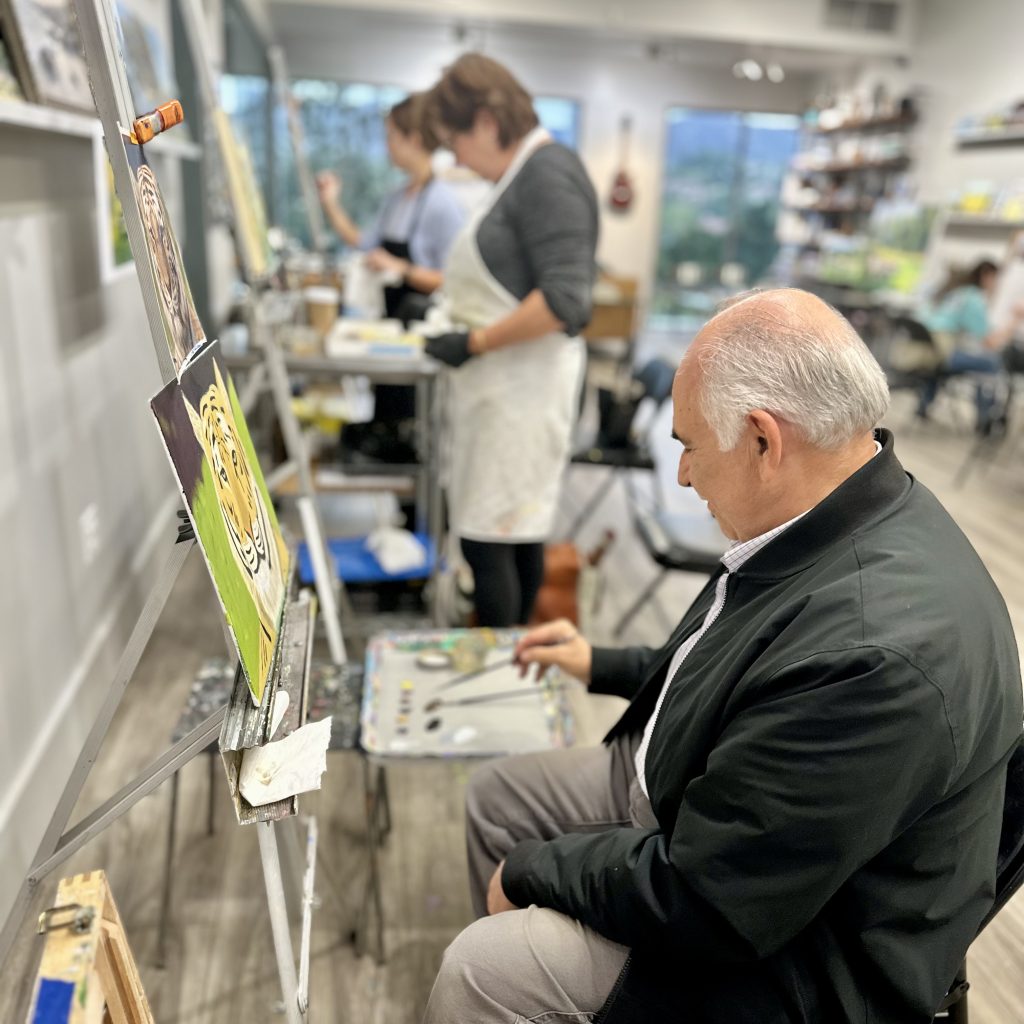
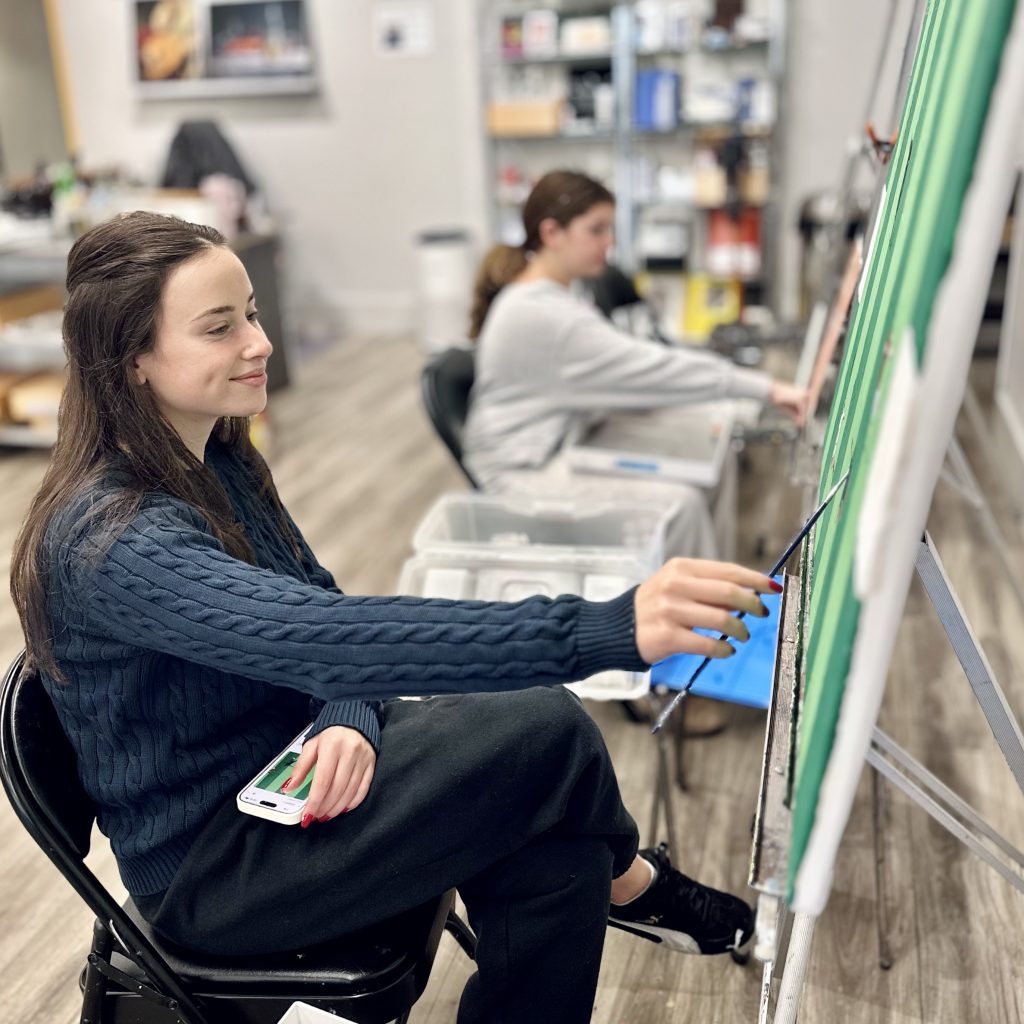
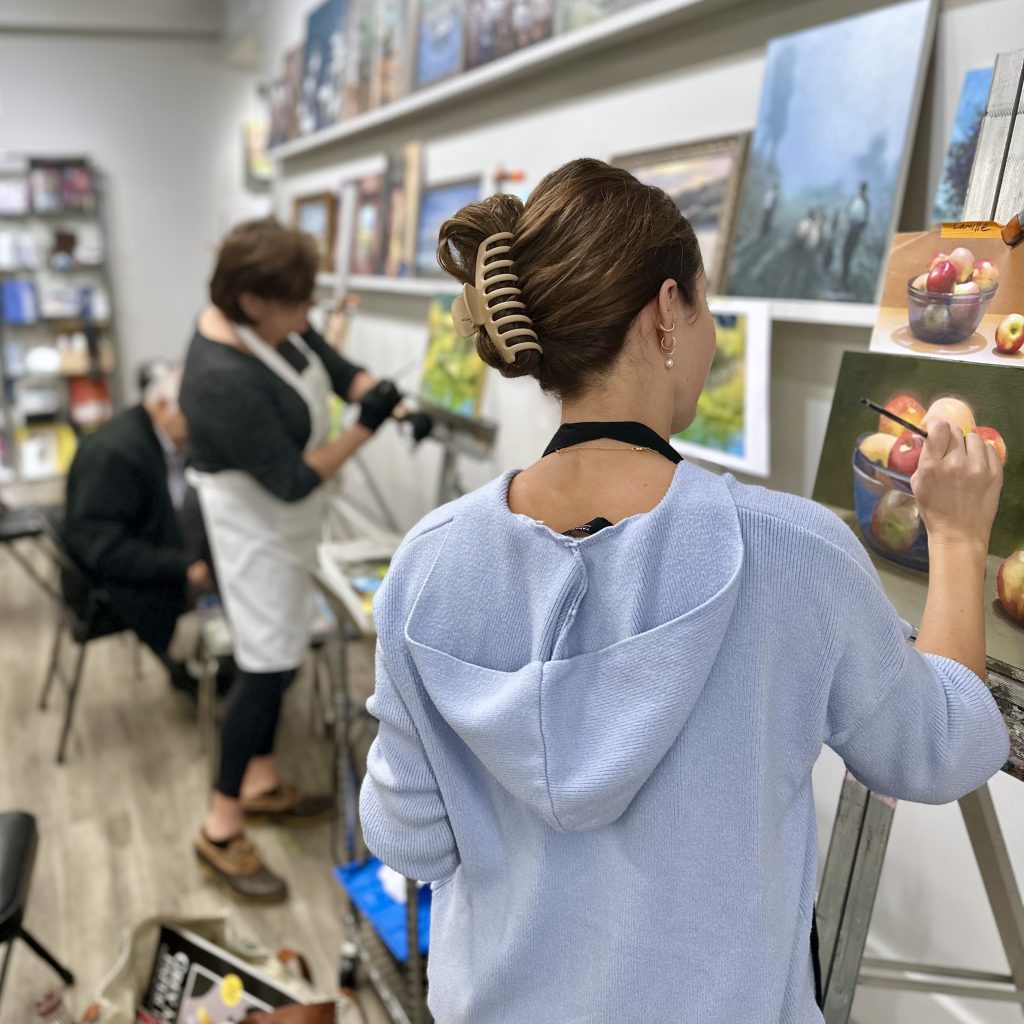
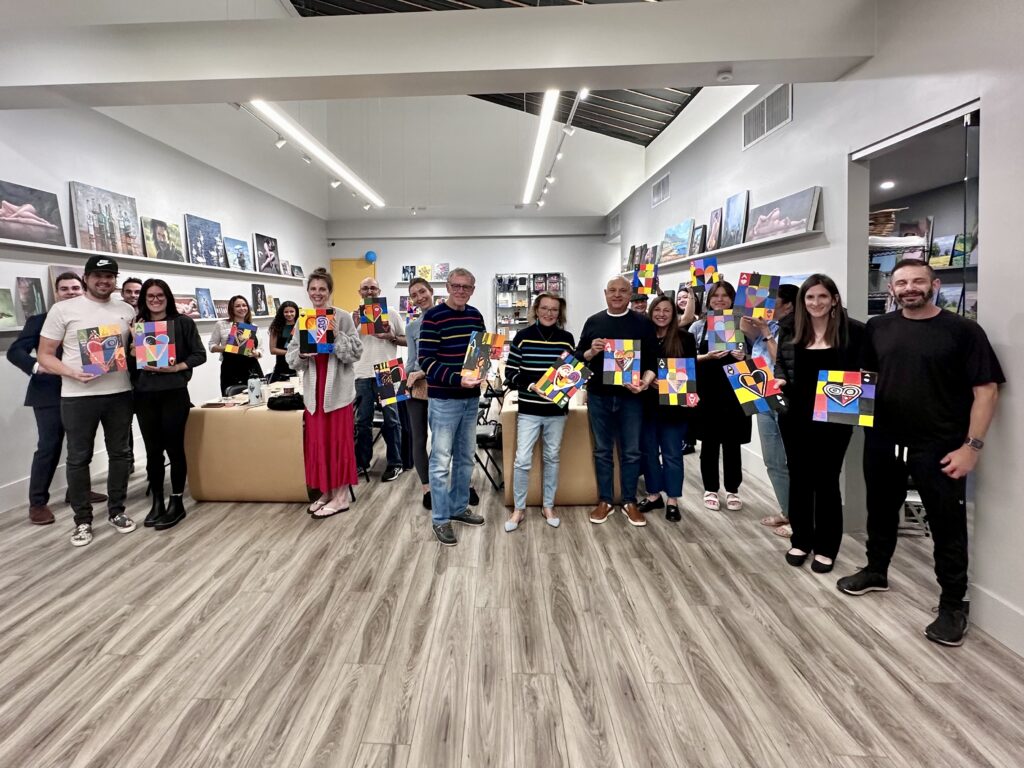
A paint & sip is a guided painting session. Everyone works on the same painting at the same time, led by an instructor who walks the room, breaks the image into manageable steps, and helps at each easel. You bring the drinks and the snacks. We bring the canvases, the paint, the brushes, the aprons, and the instruction.

Nobody needs experience. That’s the whole design of the format. The people at your party who insist they “can’t draw a stick figure” tend to be the ones holding up their canvas at the end asking someone to take a photo.

Why it works so well for company holiday parties

Most corporate events ask people to either perform or drink. A paint night asks them to do something neither competitive nor passive, and something with a finished object at the end.

A few things that make it land:

It flattens the room. Nobody’s job title helps them mix a color. Your CFO and your newest hire start at the same place, which is exactly what a good team event should do.

It gives quiet people a way in. Not everyone thrives at a loud dinner. Painting side by side creates the kind of low-stakes conversation that actually builds relationships — people talk more freely when their hands are busy.

Everyone leaves with something. A canvas goes home, or up on a cubicle wall, and it keeps working as a memory long after the catering is forgotten.

We’ve hosted teams from companies including Netflix, Fox, Amgen, and MAC. The pattern holds across all of them: the group walks in a little skeptical and leaves louder than they arrived.

Why it works for family parties too

Holiday gatherings pull together a wide age range — grandparents, teenagers, small kids, in-laws who’ve met twice. A painting session is one of the few activities that genuinely works for all of them at once.

It’s also a solution to the awkward middle of a family party, that stretch between arriving and eating where everyone is standing around. Two hours of painting fills that space with something to talk about, and every family member goes home with a piece of the day.

This works for birthdays, anniversaries, bat and bar mitzvah celebrations, bridal showers, reunions, and end-of-year get-togethers.

What makes our paint & sip different

Here’s an honest distinction worth understanding before you book anywhere.

Most paint & sip nights are run as entertainment. The instructor is at the front of the room, the image is traced onto the canvas ahead of time, and the goal is to get everyone to a finished product before the last pour.

We’re an art school. The Raminfard School of Arts is a classical atelier — we teach oil painting, drawing, and the Old Masters tradition to students who are building serious skills. Our instructors are working artists and teachers.

That changes what a party feels like in a few concrete ways:

  • The instruction is real. When someone at your event asks why their color turned muddy, they get an actual answer they’ll remember.
  • We circulate. Nobody sits stuck and frustrated for twenty minutes while the instructor talks at the front of the room.
  • We teach the way we teach everyone: what’s working, and what’s not working yet. No one gets told their painting is bad. No one gets empty praise either.
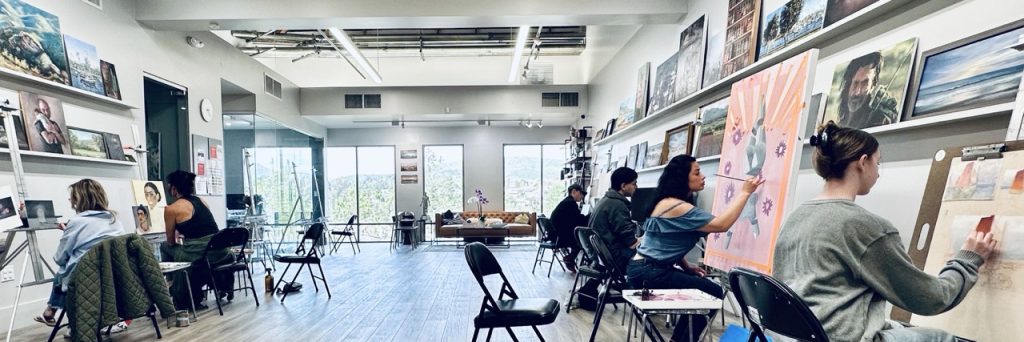
  • The studio is a real studio — easels, good light, and the smell of paint, not a party room with drop cloths.

The result is that people paint better than they expected to. And painting better than you expected is a surprisingly good feeling to give a room full of guests.

Frequently asked questions

Do we need any painting experience? No. These sessions are built for complete beginners, and most guests have never held a brush. The instructor takes the group step by step.

Can we bring alcohol? Yes, but we are unable to provide it for you.

Can children join a family party? Yes.

How long does the paint need to dry? Acrylic is dry to the touch by the end of the session, so guests can carry their canvas home the same night.

Can you match the painting to our company or our event? Often, yes — a seasonal subject, a local landscape, or something tied to your branding. Ask when you book.

Book your holiday party


Request Quote


Tell us your date, your headcount, and whether it’s a team or a family, and we’ll take it from there.

Raminfard School of Arts is a classical fine art studio in Agoura Hills offering group classes, private instruction, workshops, summer camps, and private paint parties for corporate and family events across the Conejo Valley.
Back to School: Three Months of Classes, December on Us

Art classes for all ages

For anyone who has been meaning to start painting — and wants to see real progress before the year is over.

Most people who want to learn to paint never get past the first few classes. Not because they lack talent, but because they never stay long enough to get good. Skill in drawing or painting doesn’t arrive in three lessons. It arrives somewhere around month three or four, when your hand finally catches up to your eye and you produce something you actually want to hang on a wall.

That’s what this offer is built around.

The Offer

Enroll in a monthly class subscription starting September 1. Pay for September, October, and November — December is free.

Four months of instruction for the price of three. Enough time to move from “I’ve always wanted to try this” to a finished painting you’re proud to sign.

Choose Your Pace

All classes are two hours, in-studio, with direct instruction and individual critique.

Classes Per Month Best For Price
4 Classes Trying it seriously for the first time 276
8 Classes Steady, visible progress 512
12 Classes Committed students who want to move fast 708

What You’ll Actually Learn

Raminfard School of Arts teaches in the classical tradition. That means fundamentals, taught in order: drawing, value, edges, color, and painting. Not tricks. Not one-off projects you can’t repeat.

Beginners are genuinely welcome. So are returning painters who want structure and honest feedback.

The Details

  • Available to new students only. If you’ve held an active subscription with RSA in the past six months, this offer doesn’t apply.
  • Classes must be used within the month. Unused classes don’t roll over.
  • Enrollment is open now until August 31st, 2026

Reserve Your Spot

Class sizes are capped so every student gets real instruction time.


Sign Up for a Subscription

Read Our Terms & Conditions

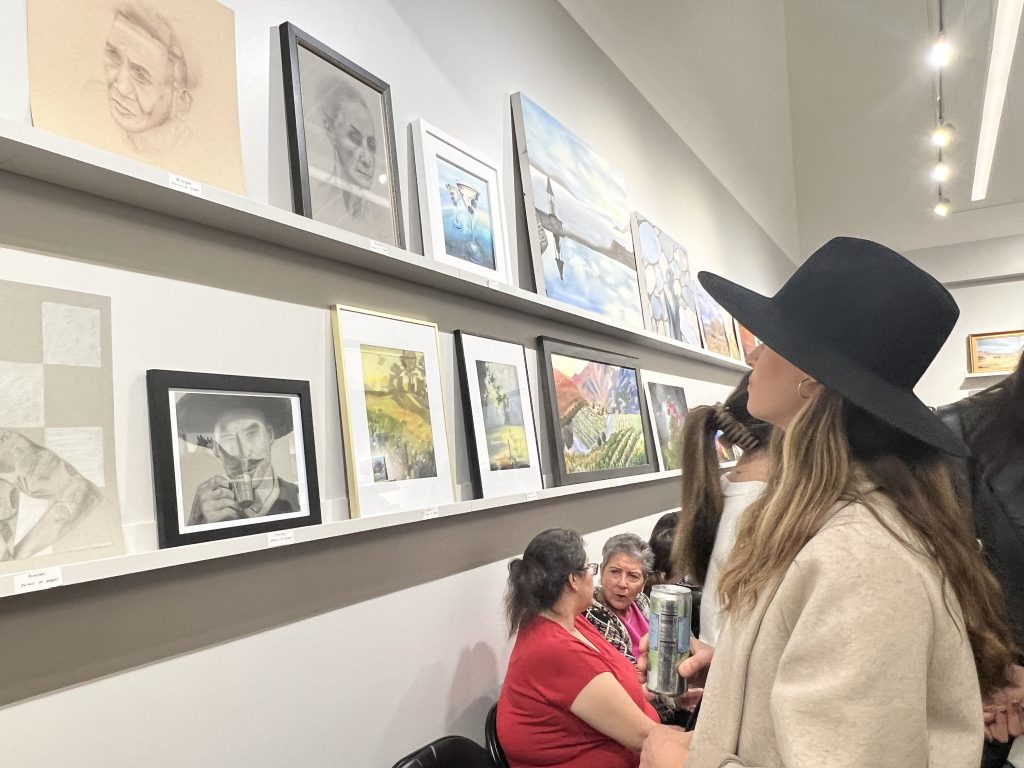
You’re Invited: The 2026 Summer Student Art Show at RSA

There’s a special kind of pride that comes from seeing your work hang on a gallery wall — and this August, our students get to do exactly that. The Raminfard School of Arts is thrilled to announce our 2026 Summer Student Art Show, and you’re invited to celebrate with us.

An Evening to Celebrate Creativity

Our bi-annual Student Art Shows are one of the most rewarding traditions at RSA. They give our artists — from first-time painters to seasoned students — the chance to share their work in a professional, gallery-style setting surrounded by family, friends, and our wider community. It’s an evening built to inspire confidence, spark connection, and honor every ounce of growth our students have poured into their art.

Expect a warm, joyful atmosphere with live music, refreshments, and walls full of original student work.

The Details

📆 Sunday, August 23rd, 2026 🥂 5:30 – 7:00 PM 🎩 Smart Casual Attire 📍 Raminfard School of Arts — 30125 Agoura Rd, Suite 2C (Second Floor), Agoura Hills, CA 91301

The evening’s highlight — our Raffle & Award Ceremony — begins at 6:30 PM, where we’ll recognize the accomplishments of our talented student artists.

What to Expect

  • 🖼️ Original student artwork on display
  • 🏅 Awards honoring student achievement
  • 🍇 Food & drinks
  • 🎶 Live music
  • 🎁 Raffles & prizes
  • 👨‍⚖️ A special guest judge

Calling All Student Artists

If you’re an RSA student, this is your moment to shine. We invite you to submit your best original pieces and masterworks for the showcase. To keep our shows meaningful, we kindly ask that only original artwork be submitted.

Register for the Summer Show here →

Bring Your People

Whether you’re exhibiting or simply coming to enjoy the evening, invite your family and friends! There’s no better way to experience the energy of our art community than in a room full of creativity, music, and celebration. Come witness the progress of our student artists, support local creativity, and be inspired by what our studio family has been making.

We can’t wait to see you there.

Summer Art Camp Where Young Artists Really Learn to  Draw and Paint

There’s a difference between filling a child’s summer and giving them something that lasts. A week of crafts is gone by September. A week spent learning to see and draw what’s actually in front of you, to mix a color that wasn’t there before, to finish a piece you’re proud to hang up, stays with a young artist for years.

That’s the difference we built our Fine Art Camp around.


Not a Craft Camp. A Real Studio.

The Raminfard School of Arts isn’t a paint-and-sip or a glue-and-glitter room. It’s a working classical art studio, where students learn the same fundamentals of drawing, value, perspective, and color. Founder Daniel Raminfard has spent 25 years teaching these methods, and during camp your child works in that same professional environment: real easels, natural light, and instructors who paint for a living.

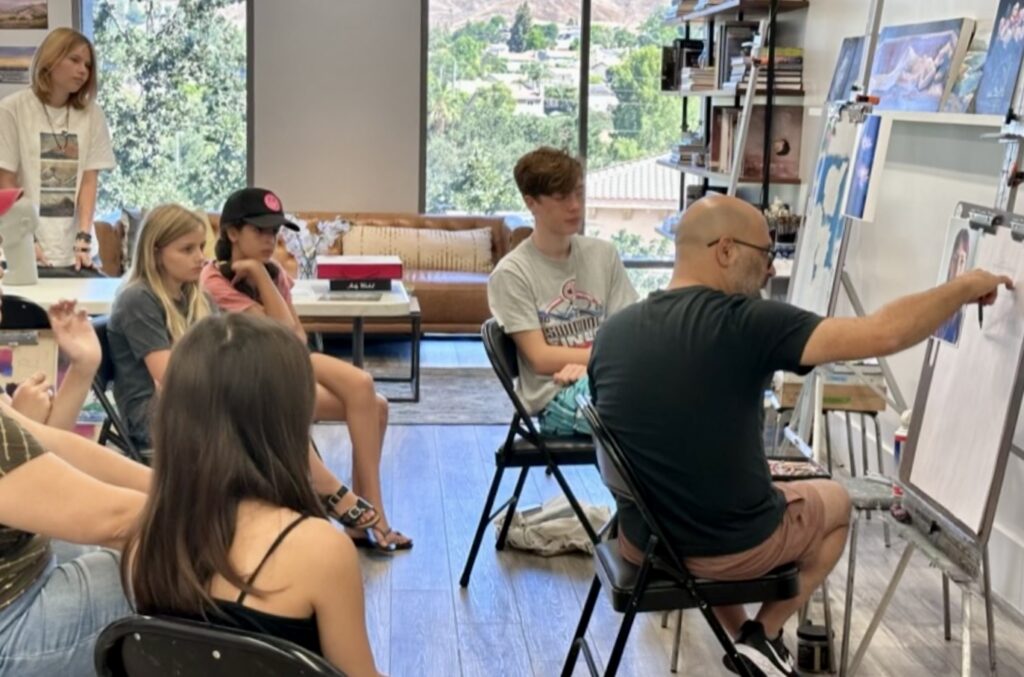
Classes stay small on purpose. Small groups mean every camper gets real attention and honest, encouraging feedback — the kind that helps a kid actually improve instead of just keeping busy.


What Your Child Will Actually Make

Over a week, campers don’t dabble in one thing, they explore many. Students work across graphite, charcoal, pastel, colored pencil, watercolor, acrylic, and oil, building a portfolio of finished pieces rather than a pile of half-started projects.


Built for Every Kind of Young Artist

Whether your child has never picked up a brush or already fills sketchbooks, our instructors meet them exactly where they are. New and beginning students get extra attention, and we steer them toward strong fundamentals first — but we never tell a young artist their idea is “too ambitious.” The ambition leads; the foundation follows.

You’ll also hear our instructors talk about what’s working and what’s not working yet in a piece, never “good” or “bad.” That small shift is the heart of how we teach: it keeps the studio a safe place to take risks, make mistakes, and grow, which is exactly what a young artist needs to flourish.


A Day at Camp

Mornings start together with whatever campers would like to work on and a few new skills. From there, campers spend the day making — drawing from observation, building a painting layer by layer, experimenting with a new medium. There’s a designated break for lunch and snacks (a chance to relax and make friends between creative sessions), and the afternoon carries the work toward something finished. By Friday, there’s a body of work to show for it.


The Details

  • When: Monday–Friday, June 8 through August 14
  • Hours: 10:00 a.m. – 3:00 p.m.
  • Ages: 9–17, all skill levels welcome
  • Where: Raminfard School of Arts
  • Supplies: All materials provided (canvases larger than 11×14″ not included)
  • Lunch: Please send a lunch with your child
  • Flexible scheduling: Sign up for a single week or several — pick the weeks that fit your summer
  • Tuition: $750 per week, with a 5% multi-week discount and a 5% sibling discount


☀️ Summer 2026 Art Camp Schedule

Week Dates Week Dates
Week 1 CLOSED June 8–12 Week 6 July 13–17
Week 2 June 15–19 Week 7 July 20–24
Week 3 SOLD OUT June 22–26 Week 8 July 27–31
Week 4 SOLD OUT June 29–July 3 Week 9 Aug 3–7
Week 5 July 6–10 Week 10 Aug 10–14

Give your young artist a summer that builds real skill, real confidence, and real friendships — in a studio where art is taken seriously, and so are they.

Spots are limited. Reserve yours today!

Sign Up for Summer Art Camp 2026


Intro to Colors and Composition — The Edgar Degas Way

A one-day painting workshop at Raminfard School of Arts · Sunday, June 7, 2026

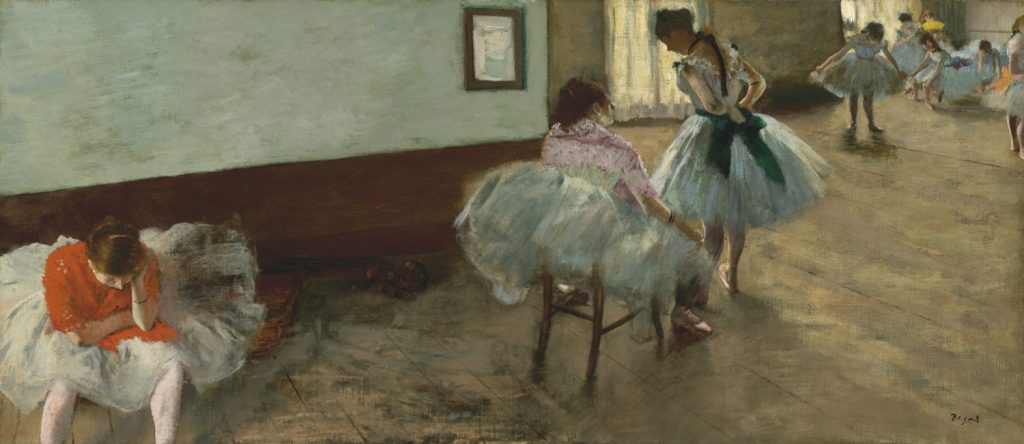
Some of the most sophisticated color in all of painting isn’t loud at all. It’s the quiet, luminous grays Edgar Degas built his dancers and interiors around — neutrals so alive that a single note of pure color set against them seems to glow. In this one-day workshop, you’ll learn how those colors are actually mixed, and how to arrange them on the canvas with the bold, off-balance composition that made Degas a revolutionary.

What we’ll do

Working in acrylic on 11×14 canvas, we’ll build a series of color-and-composition studies. I’ll demonstrate each one, then you’ll paint your own.

We’ll move through several deliberately limited palettes:

  • Three studies using a single primary color, its complement, plus black and white. This is the secret behind beautiful, chromatic grays — they come from mixing complements, not from a tube.
  • A final study using the famous Zorn palette — yellow ochre, red, black, and white — the spare four-color palette that masters have used to paint everything from portraits to full scenes.

Throughout, we’ll compose the Degas way: strong diagonals, asymmetry, and bold cropping that puts energy and tension into the frame.

Why this approach works

Limiting your palette is the fastest way to truly understand color. When you can’t reach for forty tubes, you learn how color actually behaves — how complements neutralize one another, how a single pure note can light up a field of grays, and how value does most of the heavy lifting. It’s the same principle behind the classical training we’ve taught at RSA since 2000, and it will change how you mix color long after the workshop ends.

Who it’s for

This is an introductory workshop, so beginners are genuinely welcome — but the ideas run deep enough that experienced painters will take plenty home, too. If you’ve ever felt your colors turn muddy, or your paintings feel a little static and centered, this is the day for you.

The details

  • Date: Sunday, June 7, 2026
  • Time: 10:30 AM – 4 PM
  • Location: Raminfard School of Arts, Agoura Hills
  • Medium: Acrylic
  • Included: All supplies, plus snacks and drinks — just bring yourself
  • Price: $150 general · $135 for subscription members

Space is limited and our workshops fill up quickly. Reserve your spot here →

Summer Art Camp at Raminfard School of Arts: Real Fine Art, Not Crafts

Fine art classes

If you’ve signed your child up for a “summer art camp” before and they came home with a paper plate covered in macaroni, this post is for you.

Most summer programs use the word “art” loosely. At The Raminfard School of Arts, we mean it the way the Old Masters meant it.


What “Real Art” Means at Our Camp

Summer camp at RSA is built on the same classical fine art foundation we’ve used to train students since 2000. Your child will not be gluing pasta, painting rocks, or splattering acrylics on canvas as a stand-in for technique. They will be learning the skills artists have been taught for 500 years — observation, drawing from life, value, proportion, and color.

We teach the way the Dutch Masters, the French Academy, and figure-drawing instructors like John Vanderpoel taught: fundamentals first, skill earned through guided repetition and direct feedback.


What Your Child Will Actually Do

Depending on age and skill level, campers work through:

Drawing fundamentals — measuring, proportion, line quality, and learning to see accurately
Value studies — rendering light and shadow in graphite and charcoal
Color theory and mixing — understanding how paint actually works, not just picking tube colors
Painting from observation — working from still-life setups arranged in studio
Classical techniques — including grisaille underpainting and the layered methods used by Rembrandt and Vermeer
Composition and design — how to make a picture work, not just fill it
Mediums include graphite, charcoal, gouache, acrylic, colored pencil, and (for older students) oil painting.


Why It Matters

Children are capable of far more than craft kits suggest. When you teach a young student how to actually look at a still life and translate what they see, two things happen:

They produce work they are genuinely proud of — not refrigerator filler, but real drawings and paintings.
They build transferable habits: focused observation, patience, problem-solving, and the ability to see a long project through to a finish.
These are the habits classical art training has always built. We’ve watched them carry over into school, sports, and the way kids approach challenges generally.


Who It’s For

Our summer camp serves students from complete beginner through advanced. Every camper gets direct instruction from teachers trained in classical methodology.


Reserve Your Child’s Spot

Spots are limited because we keep our instructor-to-student ratio low and the quality of instruction high. To enroll or ask questions, visit raminfardart.com or contact us directly.

Is Your Teen Applying to Art School? Here’s What Their Portfolio Actually Needs

For a teen who wants to pursue art in college, the portfolio isn’t just a homework assignment. It’s the most important thing they’ll submit — more than their GPA, more than their essay, more than their extracurriculars. Admissions committees at art programs look at the portfolio first and ask one question: Can this student see, think, and create at a serious level?

At Raminfard School of Arts, we’ve been helping teens in the Conejo Valley answer that question with confidence since 2000. Here’s what goes into a portfolio that actually works — and how we help students build one.


What Art Schools Are Really Looking For

Most teens (and their parents) assume a strong portfolio means impressive finished pieces. Technically detailed. Polished. Impressive-looking.

That’s part of it — but it’s not the whole picture.

What admissions panels actually want to see is evidence of a trained eye and a developing artistic voice. They want to know:

  • Can this student observe the world accurately and translate it to the page?
  • Do they understand value, proportion, composition, and light?
  • Is there growth and intention behind the work — or just decoration?
  • Does this student have something to say?

A portfolio full of traced anime characters or digitally filtered photos won’t cut it — even if they look clean. But a cohesive body of work that shows real observational drawing, thoughtful composition, and a developing personal perspective? That gets accepted.


The Foundation: Why Drawing Comes First

Before a teen can build a meaningful portfolio, they need to be able to draw. Not perfectly — but with discipline and understanding.

At RSA, our portfolio mentoring starts with the fundamentals:

  • Form and proportion — understanding how to see and render three-dimensional objects convincingly
  • Value and light — building the kind of depth that makes a drawing feel real
  • Composition — knowing where to place things and why it matters
  • Portraiture and the figure — the most scrutinized and universally required skill in fine art admissions

These are not shortcuts. They’re the skills that separate applicants who get in from those who don’t.


What a Strong Teen Portfolio Looks Like

Most college art programs request between 10 and 20 pieces. The work should demonstrate range — different subjects, different media, different levels of complexity — while still feeling like it came from the same developing artist.

A strong portfolio typically includes:

  • Life drawing and observational studies — work drawn from real life, not imagination or reference photos alone
  • A self-portrait — one of the most common requirements, and one of the most revealing
  • Still life work — demonstrating command of light, shadow, and form
  • Sketchbook pages — showing process, thinking, and exploration over time
  • A personal project — a series of pieces tied together by a concept, theme, or subject

The sketchbook especially tends to surprise students. Admissions committees love seeing how a student thinks — not just what they can produce when they’re trying their best.


How RSA Helps Teens Prepare

Our portfolio development program is built around one-on-one mentoring with professional artists who understand what schools are looking for. We work with each student to:

  • Assess their current skill level and identify the gaps that need to close before applications are due
  • Design a personalized portfolio plan with specific projects, deadlines, and milestones
  • Build the foundational skills that make every piece stronger — figure, portrait, still life, and beyond
  • Curate and sequence the final portfolio so it presents the student in the strongest possible light
  • Prepare for the artist statement and any supplemental materials required by the programs they’re applying to

We’ve worked with students applying to Cal Arts, Otis, RISD, the Savannah College of Art and Design, and university fine art programs across the country. We know what these programs expect — and we know how to get students there.


When Should Your Teen Start?

The honest answer: earlier than they think.

A competitive portfolio takes time to develop. Students who begin the process a year or more before applications are due have a real advantage — not because they have more pieces, but because they have more room to grow. The work done in month one looks different from the work done in month twelve, and that growth arc is something admissions panels notice and respond to.

If your teen is a junior or senior starting now, that’s okay too. We’ll focus on the highest-impact work and make the most of the time available.


Let’s Build Something They’re Proud Of

A strong portfolio doesn’t just open doors to art school. It changes how a teen sees themselves as an artist. The confidence that comes from building a body of serious work — from scratch, with discipline and real guidance — carries over into everything they do.

If your teen is serious about art school, we’d love to talk.

📞 (310) 869-4209 📧 info@raminfardart.com

Schedule a Portfolio Consultation


Raminfard School of Arts has offered fine art classes, private lessons, and portfolio mentoring in Agoura Hills, CA since 2000. Proudly serving Westlake Village, Thousand Oaks, Calabasas, Oak Park, and the greater Conejo Valley.

Why Drawing the Head is the Hardest and Most Rewarding Skill in Fine Art

Head Drawing Workshop

There’s a reason portrait drawing stops so many artists in their tracks. The human face is something we’re wired to read with extraordinary precision. We notice when something is off — even when we can’t explain why. A nose placed a fraction too high, eyes spaced slightly too wide — and suddenly the likeness disappears.

That’s what makes head drawing one of the most challenging disciplines in all of fine art. It’s also what makes it one of the most deeply satisfying skills to develop.

On Sunday, April 12, Raminfard School of Arts is hosting a return of one of our most popular workshops: Head Drawing Fundamentals — and we’d love for you to join us.


What You’ll Learn

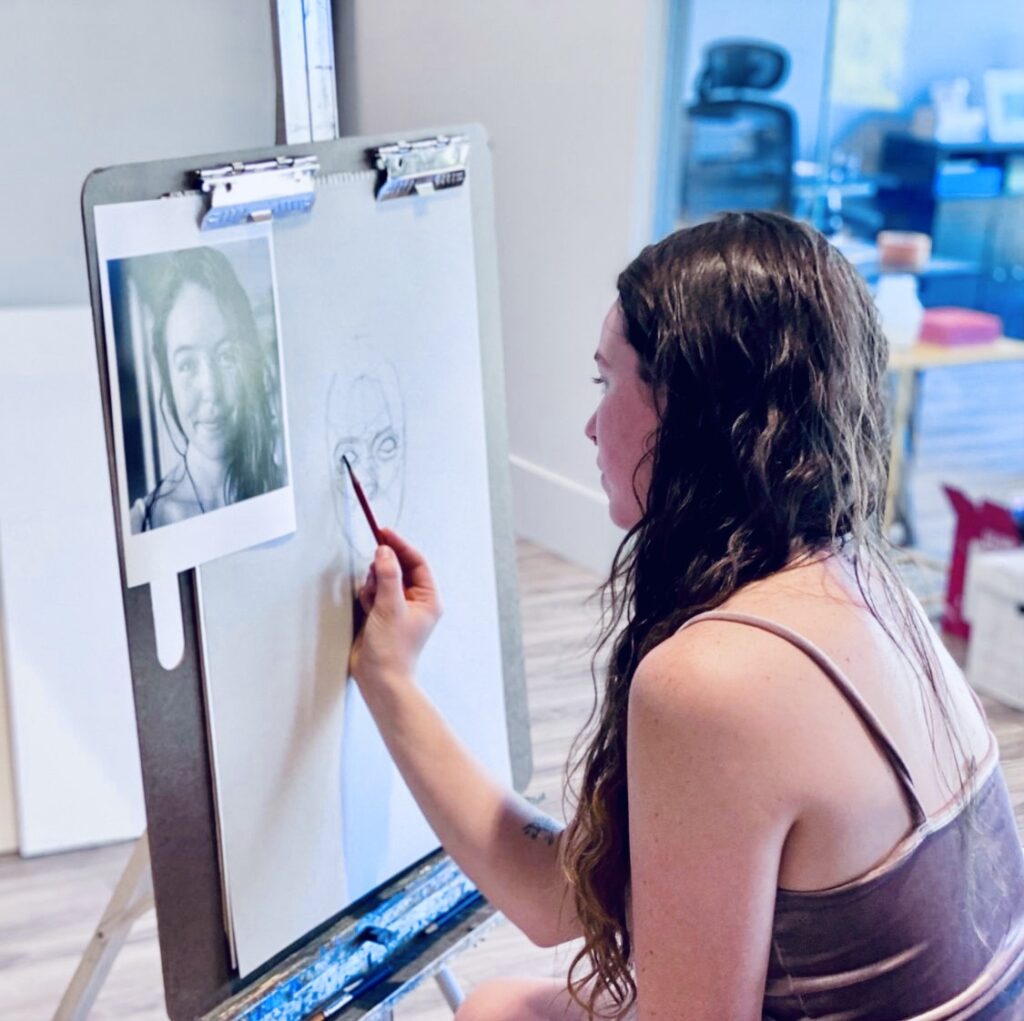
This is a hands-on, all-day workshop focused on building real, foundational skills for drawing the head from observation. Whether this is your first time tackling portraiture or you’ve been working on it for years and want to sharpen your approach, this workshop is designed to meet you where you are.

We’ll cover:

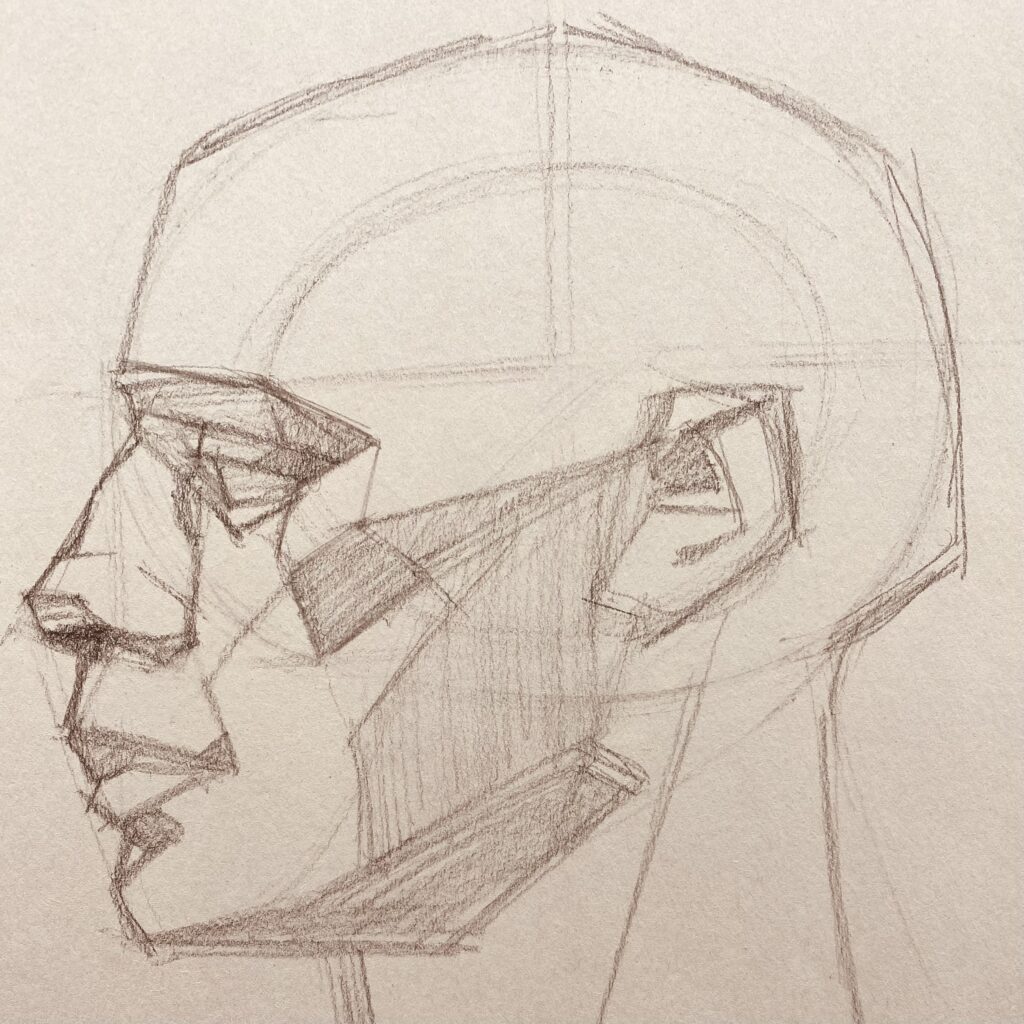
  • Proportion — understanding the relationships between the eyes, nose, mouth, and ears that make a face feel structurally correct
  • Shading and value — how to build form with graphite so the head reads as three-dimensional rather than flat
  • Capturing likeness — the subtle decisions that move a drawing from “generic face” to a recognizable, living person
  • Demos and guided practice — you won’t just listen, you’ll draw throughout the day with direct feedback and support

The Details

📅 Date: Sunday, April 12
🕙 Time: 10:30 AM – 4:00 PM
📍 Location: Raminfard School of Arts, Agoura Hills, CA
💰 Price: $150 per person
🎨 Medium: Graphite
🖍️ Includes: All materials, snacks, and drinks


Who Is This For?

This workshop is open to all skill levels — truly. If you’ve never drawn a face before, you’re in the right place. If you’ve been painting portraits for years but feel like something isn’t clicking, you’re equally welcome. Our workshops are structured so that beginners get clear foundational guidance while more experienced artists are challenged to deepen their understanding.

The only prerequisite is that you want to improve.


Why This Workshop Keeps Selling Out

Head Drawing Fundamentals is one of RSA’s most requested workshops — and this is a repeat for a reason. Students consistently leave with a clearer understanding of the head’s underlying structure, and more importantly, with drawings they didn’t think they were capable of making.

At RSA, we’ve been teaching drawing and painting in the Conejo Valley since 2000. Our approach is rooted in the academic tradition of careful observation, and our workshops reflect that same commitment to real skill-building over shortcuts or tricks.


Space Is Limited — Register Today

This is an intimate workshop — spots are limited by design so that every participant gets personal attention.

Register for April 12 Head Drawing Workshop


Raminfard School of Arts offers drawing and painting workshops, weekly classes, and private lessons for all ages in Agoura Hills, CA. Proudly serving Westlake Village, Thousand Oaks, Calabasas, Oak Park, and the greater Conejo Valley.


Not Sure If Art Classes Are Right for You? Try Before You Commit!

Drawing and painting art classes in Agoura Hills at Raminfard School of Arts

Not Sure If Art Classes Are Right for You? Try Us First.

Starting something new feels like a big commitment — especially when you’re not sure it’s the right fit. At Raminfard School of Arts in Agoura Hills, we make it easy to find out with two low-risk options: a single trial lesson or a trial month.

Whether you’re an adult who’s always wanted to learn to paint, or a parent looking for art classes near Agoura Hills for your child, our trial options let you experience RSA before committing to anything long-term.

Option 1: Trial Lesson

A trial lesson is a single, full-length class — not a watered-down demo, but an actual session with one of our instructors. In one visit, you’ll work with professional-grade materials, learn foundational techniques in your chosen medium (oils, acrylics, charcoal, watercolor, and more), and get a real feel for our studio and teaching style.

A trial lesson is ideal if you’re on a tight schedule or simply want to test the waters.

Option 2: Trial Month

One class doesn’t always tell the whole story. Art is a skill that builds over time, and a full trial month gives you the chance to see real progress, work on a cohesive project from start to finish, and build a genuine connection with your instructor.

Many of our long-term students started with a trial month — and never looked back.

Classes for Kids, Teens, and Adults in Agoura Hills

For parents: If your child has shown interest in drawing or painting — or just needs a creative outlet — a trial is the perfect way to see how they respond. We offer private lessons for kids ages 8–11 and group classes for ages 9 and up. Our instructors know how to keep young artists engaged and encouraged.

For adults: It’s never too late to start. Whether you’re a complete beginner or returning to art after years away, our adult drawing and painting classes are welcoming, relaxed, and genuinely enjoyable. Many of our adult students say their weekly class is the highlight of their week.

What We Offer at RSA

Raminfard School of Arts is a fine arts studio located at 30125 Agoura Rd, Agoura Hills, CA, with weekday classes in morning, afternoon, and evening sessions. We teach in oils, acrylics, charcoal, pencil, pastels, watercolors, and graphite — so there’s room to explore what feels right for you.

Our programs include:

  • Private art lessons for kids and adults
  • Small group drawing and painting classes for kids, teens, and adults
  • Monthly fine art workshops — figure drawing, portrait, landscape, and more
  • Summer Art Camp for young artists ages 9–17

Ready to Try? Here’s How.

Getting started takes three steps:

  1. Book your trial — choose a single lesson or a full trial month.
  2. Show up — we provide all drawing supplies; just bring your curiosity.
  3. Decide from there — no pressure, no obligation.

The hardest part is just starting. We’ve made everything else easy.


Book Your Trial Class


Why Every Painter Should Try Zorn’s Limited Palette

If you’ve ever stood in front of your paint collection feeling overwhelmed by choices, you’re not alone. One of the biggest challenges painters face isn’t learning to use more colors. It’s learning to use fewer.That’s the beauty of the Zorn palette.

Zorn Limited Palette Workshop

Who Was Anders Zorn?

Anders Zorn was a Swedish painter born in 1860 who became one of the most celebrated portrait and figure artists of his time. He painted presidents, aristocrats, and everyday scenes with a luminous quality that still captivates artists today. What made his work remarkable wasn’t just his skill. It was the restraint behind it. Zorn built many of his most famous paintings using just four colors: Yellow Ochre, Cadmium Red, Ivory Black, and Titanium White. No blues. No greens. No elaborate color wheel. Just four pigments and a deep understanding of how they work together.

Why Four Colors?

It sounds limiting, and that’s exactly the point. When you strip your palette down to four colors, something surprising happens. You stop chasing color and start seeing value. You begin to understand how warm and cool temperatures create the illusion of a full spectrum. You discover that Ivory Black, when mixed with Yellow Ochre, produces rich, convincing greens. That Cadmium Red and Yellow Ochre together give you warm, glowing skin tones. That you can suggest the color of a blue sky without ever touching a tube of blue. Working with a limited palette trains your eye in ways that a full palette simply cannot. It forces you to slow down, observe more carefully, and make deliberate mixing decisions instead of reaching for the easy answer.

Who Is This For?

Beginners often feel intimidated by color mixing. The Zorn palette removes that barrier by giving you a focused starting point. You learn the fundamentals of value, temperature, and color relationships without drowning in options.

Experienced painters benefit just as much. If you’ve been painting for years and feel stuck in your habits, working with only four colors pushes you out of your comfort zone and sharpens instincts you may have been taking for granted.

What You’ll Walk Away With

Painters who study the Zorn palette consistently report a shift in how they see color, not just on the canvas but in the world around them. Suddenly you notice the warmth in a shadow or the coolness in a highlight. You start mixing with intention rather than guesswork. That confidence carries over into every painting you make going forward, regardless of how many colors are on your palette.

Experience It at RSA

At the Raminfard School of Arts, we’re offering a one day Zorn’s Limited Palette Workshop on Sunday, March 22 from 10:30 AM to 4:00 PM. Led by professional artists in our studio, the workshop includes guided exercises, hands on painting, and personalized instruction. All materials are provided, and all skill levels are welcome. If you’ve been curious about color mixing or just want to challenge yourself as a painter, this is the place to start.


Register for March 22 Workshop