Is Your Teen Applying to Art School? Here’s What Their Portfolio Actually Needs
For a teen who wants to pursue art in college, the portfolio isn’t just a homework assignment. It’s the most important thing they’ll submit — more than their GPA, more than their essay, more than their extracurriculars. Admissions committees at art programs look at the portfolio first and ask one question: Can this student see, think, and create at a serious level?
At Raminfard School of Arts, we’ve been helping teens in the Conejo Valley answer that question with confidence since 2000. Here’s what goes into a portfolio that actually works — and how we help students build one.
What Art Schools Are Really Looking For
Most teens (and their parents) assume a strong portfolio means impressive finished pieces. Technically detailed. Polished. Impressive-looking.
That’s part of it — but it’s not the whole picture.
What admissions panels actually want to see is evidence of a trained eye and a developing artistic voice. They want to know:
- Can this student observe the world accurately and translate it to the page?
- Do they understand value, proportion, composition, and light?
- Is there growth and intention behind the work — or just decoration?
- Does this student have something to say?
A portfolio full of traced anime characters or digitally filtered photos won’t cut it — even if they look clean. But a cohesive body of work that shows real observational drawing, thoughtful composition, and a developing personal perspective? That gets accepted.
The Foundation: Why Drawing Comes First
Before a teen can build a meaningful portfolio, they need to be able to draw. Not perfectly — but with discipline and understanding.
At RSA, our portfolio mentoring starts with the fundamentals:
- Form and proportion — understanding how to see and render three-dimensional objects convincingly
- Value and light — building the kind of depth that makes a drawing feel real
- Composition — knowing where to place things and why it matters
- Portraiture and the figure — the most scrutinized and universally required skill in fine art admissions
These are not shortcuts. They’re the skills that separate applicants who get in from those who don’t.
What a Strong Teen Portfolio Looks Like
Most college art programs request between 10 and 20 pieces. The work should demonstrate range — different subjects, different media, different levels of complexity — while still feeling like it came from the same developing artist.
A strong portfolio typically includes:
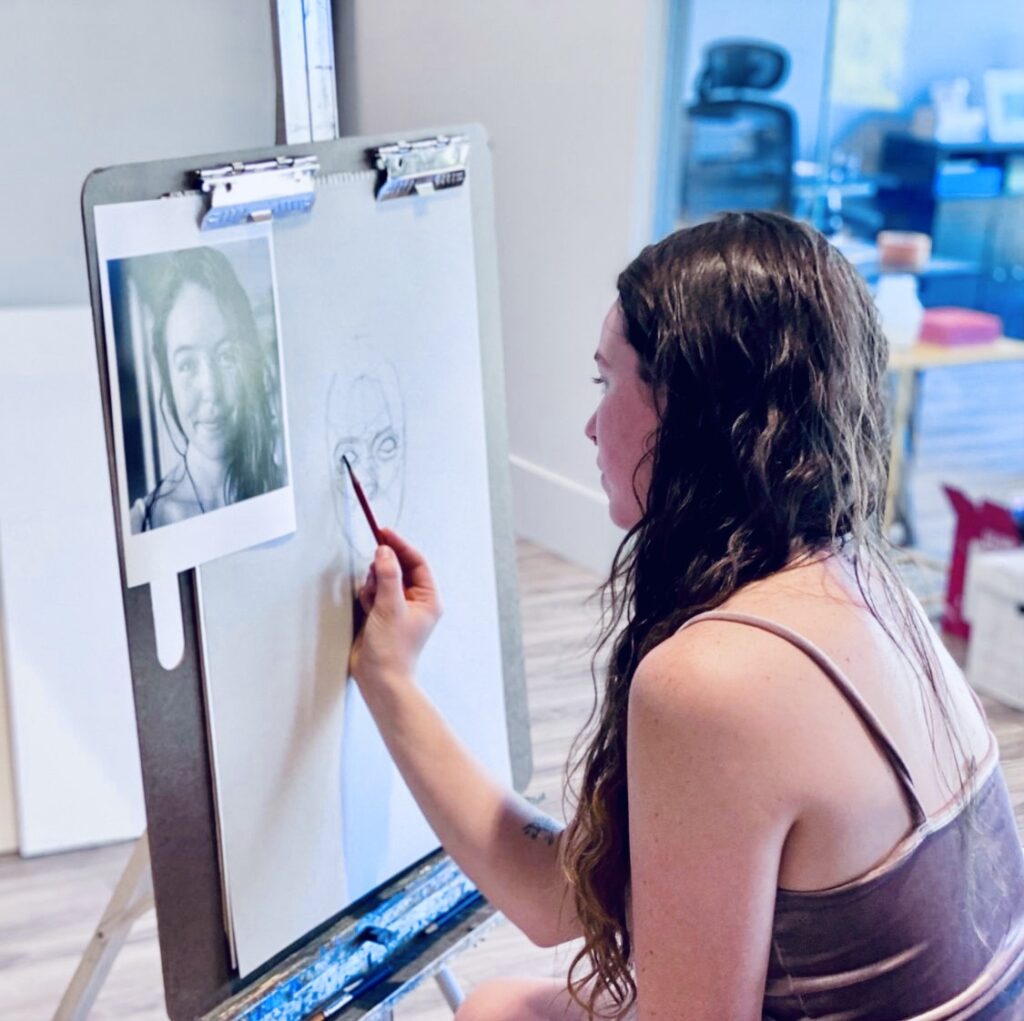
- Life drawing and observational studies — work drawn from real life, not imagination or reference photos alone
- A self-portrait — one of the most common requirements, and one of the most revealing
- Still life work — demonstrating command of light, shadow, and form
- Sketchbook pages — showing process, thinking, and exploration over time
- A personal project — a series of pieces tied together by a concept, theme, or subject
The sketchbook especially tends to surprise students. Admissions committees love seeing how a student thinks — not just what they can produce when they’re trying their best.
How RSA Helps Teens Prepare
Our portfolio development program is built around one-on-one mentoring with professional artists who understand what schools are looking for. We work with each student to:
- Assess their current skill level and identify the gaps that need to close before applications are due
- Design a personalized portfolio plan with specific projects, deadlines, and milestones
- Build the foundational skills that make every piece stronger — figure, portrait, still life, and beyond
- Curate and sequence the final portfolio so it presents the student in the strongest possible light
- Prepare for the artist statement and any supplemental materials required by the programs they’re applying to
We’ve worked with students applying to Cal Arts, Otis, RISD, the Savannah College of Art and Design, and university fine art programs across the country. We know what these programs expect — and we know how to get students there.
When Should Your Teen Start?
The honest answer: earlier than they think.
A competitive portfolio takes time to develop. Students who begin the process a year or more before applications are due have a real advantage — not because they have more pieces, but because they have more room to grow. The work done in month one looks different from the work done in month twelve, and that growth arc is something admissions panels notice and respond to.
If your teen is a junior or senior starting now, that’s okay too. We’ll focus on the highest-impact work and make the most of the time available.
Let’s Build Something They’re Proud Of
A strong portfolio doesn’t just open doors to art school. It changes how a teen sees themselves as an artist. The confidence that comes from building a body of serious work — from scratch, with discipline and real guidance — carries over into everything they do.
If your teen is serious about art school, we’d love to talk.
📞 (310) 869-4209 📧 info@raminfardart.com
Schedule a Portfolio Consultation
Raminfard School of Arts has offered fine art classes, private lessons, and portfolio mentoring in Agoura Hills, CA since 2000. Proudly serving Westlake Village, Thousand Oaks, Calabasas, Oak Park, and the greater Conejo Valley.